Writing
Our Aim / Intent
At Little London Academy, we strive to ensure that all our pupils are provided with the tools to enable them to become competent and effective writers. Developing a love for writing is an essential component of this and our writing curriculum intends to allow children to be creative, expressing their thoughts, feelings and ideas onto paper for a variety of purposes.
As a school, we follow the Talk 4 Writing framework. This sequence of learning supports students to be independent, no matter their age, background or ability. In addition, explicit teaching of spelling, punctuation, grammar and handwriting supply pupils with the necessary skills to flourish across the wider curriculum.
Writing Curriculum
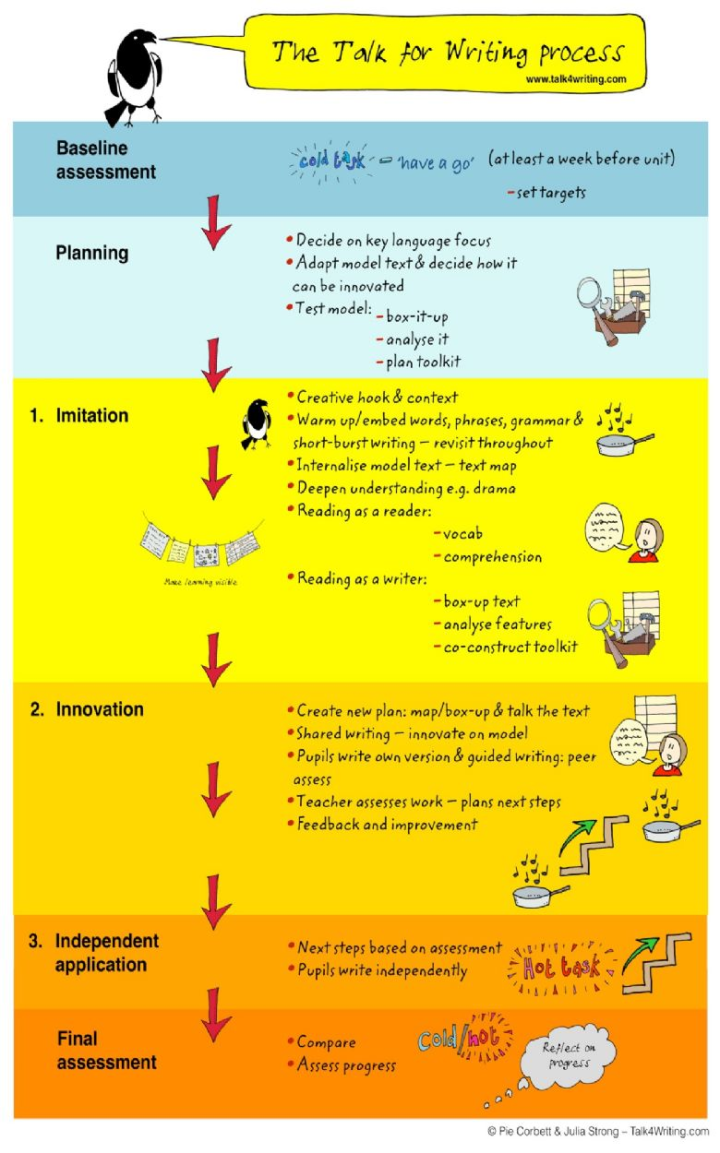
Writing lessons are taught daily and it is embedded throughout the wider curriculum. Lessons are planned in accordance with the Talk 4 Writing framework and follow the 4 main components (Cold task, Imitation, Innovation and Independent Application). Each stage aims to provide students with the opportunity to develop their writing by learning sentence patterns that align with the ‘toolkit’ for that genre of writing. The teaching of year group specific grammar is threaded throughout the unit of work, as well as separate teaching of spellings and handwriting.
The lesson sequence is as follows:
-
Grammar starter (linked to common misconceptions identified from teacher marking).
-
A Writing Game – aims to engage children and enables them to be creative.
-
Imitation of the focus text
-
Explicit teaching of a skill linked to the toolkit
-
Short burst writing – where children apply the skill in context
Talk 4 Writing Stages
Imitation
A unit of work begins with students completing a cold task. This is where they are given a stimulus that is linked to the writing toolkit that they will be developing in that unit. Teachers then gather general evidence of what students can and cannot do effectively.
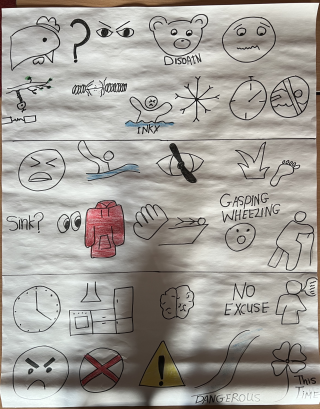
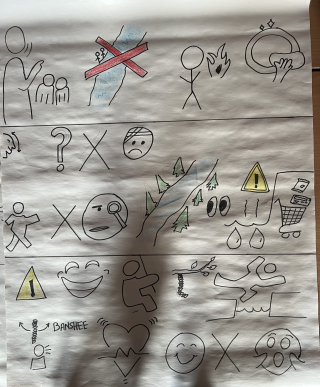
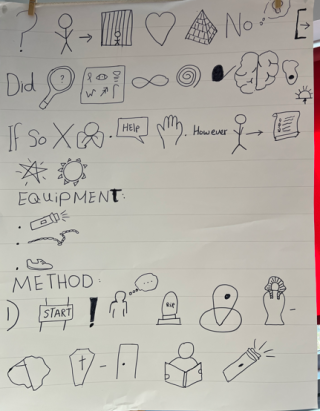
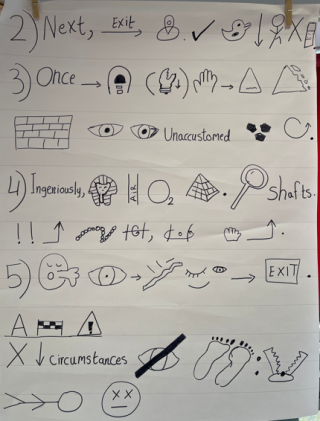
Teachers then plan an engaging hook to excite the class. Following this, children begin to imitate a modelled text using a ‘story map’. This text is written above average standard of the class to ensure they are working inspirationally. Vocabulary and the features are broken down and explained to the children so that they can adopt these in their individual pieces at the end of the unit.
In each lesson, children will complete a ‘short burst write’ which is linked to the focus toolkit. It begins with plugging gaps from previous years identified in the cold task and moves onto key stage specific writing outcomes. Explicit modelling and shared writing, combined with sharing of ideas enables students to write using a variety of techniques.
Year 3 – The Canal
A story map for a warning story linked to the suspense toolkit.
Year 5 – How to Escape an Ancient Pyramid
A text map for a set of instructions.
Innovation
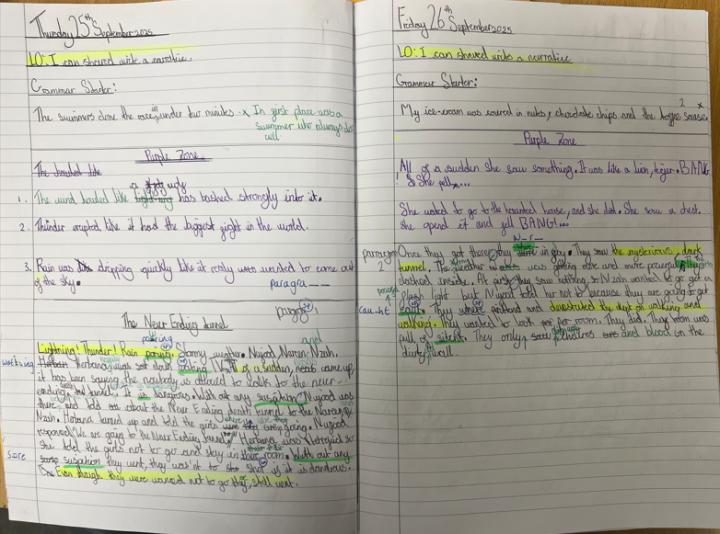
Once the modelled text has been clearly internalised by the students, we move onto the innovation stage. This is where a teacher will work with the children to create their own versions of the text, using the features they have been taught. Newly innovated plans, linked to the modelled text, are then written by the teacher with help from the students. They then write their own versions which is heavily guided and supported by the teacher. Live marking and daily feedback are given to ensure that any gaps are identified and amended before moving on to the independent write.
An example of innovated writing.
Independent application
After an innovated text has been written, students then begin to circle plan and box up their own ideas independently. They are given the opportunity to share ideas and talk through their plans with their peers. Using these plans, children will then complete a hot task where they write their own narrative or non-fiction text using the toolkit as a guide. This hot task is then assessed by the teacher using the assessment rubric.
EYFS / Y1
In Early Years and the beginning of Year 1, children internalise stories in the imitation phase and complete simple substitution in innovate their stories. This involves changing the characters and settings rather than creating their own sentences. This allows more time for teachers to focus on building strong foundations in writing. Mastering basic transcription skills (spelling, handwriting and punctuation) enables the children to become competent writers as they move through school. Rich conversations and storytelling allow the children to develop language comprehension through listening and speaking. After innovating, they invent new stories through drawing, playing and writing.
Assessment
Throughout each unit of work, children are given consistent and effective feedback that enable them to improve as writers. Secretarial marking is provided in each lesson to ensure that any gaps are identified and rectified imminently. Teachers provide students with verbal feedback for persistent errors which leads to necessary interventions that take place in small, targeted groups. A focus on these interventions is plugging the gaps for those children who haven’t yet secured strong foundations in English. Children at Little London Academy are formally assessed on their writing two times each term. At the end of a unit, an independent hot task is completed whereby pupils write their own fiction or non-fiction text. Teachers then assess this against a marking rubric to determine the level they are working at. From this, next steps are identified from the child and are added to individual personalisation plans. Future formative feedback will be centred around these next steps.
Oracy
To support our wide range of learners, especially those who are disadvantaged, we provide opportunities for oracy and drama development. In each year group, children have the chance to talk about their ideas and gain a deeper understanding of characters through drama. In doing so, writing outcomes amongst both our higher and lower attaining children improve each unit. The oracy skills developed in these writing lessons are then implemented in the wider curriculum.